A visit to Innsbruck Botanic Garden
On a sunny Saturday morning in June, I walk along the bank of the river Inn, lined with Salix alba. One of the perks of travelling as a musician is that I get to visit lots of different places and, wherever I am, I try to squeeze in a visit to a garden. This trip to Innsbruck is one of the more relaxed itineraries, arriving the day before the gig, leaving plenty of time to explore.
Crossing the bridge (bruck in German) that gave Innsbruck its name, I start to climb through a quiet, residential neighbourhood. Blindly following Google Maps, I stumble into Innsbruck Botanic Garden through the upper gate rather than the main entrance. By coming downhill in this way, I don’t quite grasp the impressive complexity of this compact site. Instead it slowly unfolds, providing surprise and delight.
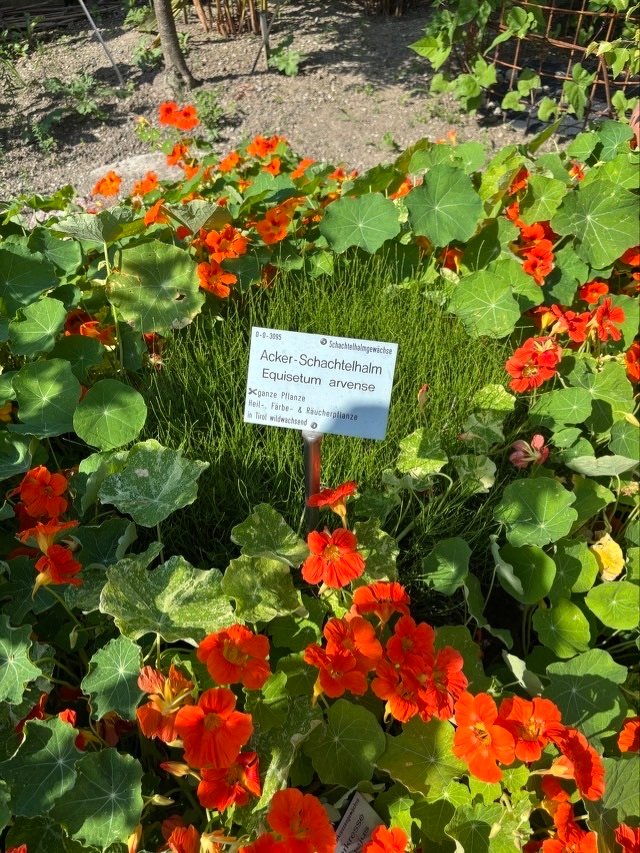
I find myself first in an apothecary garden, with all manner of healing plants. Alongside those plants one might expect to find - Artemesia, Betonica officinalis, Nasturtium - they’re growing Urtica dioica and, bravely, Equisetum arvense.
!A patch of Equisetum arvense, surrounded by bright red Nasturtium](https://atthewyldedge.com/uploads/2026/eecf7316c1.jpg) *Equisetum arvense, planted in a thick container and carefully guarded by Nasturtium *
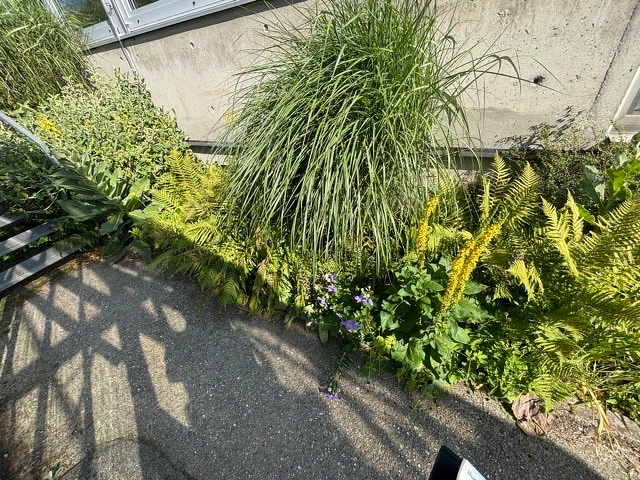
Sadly, the glasshouses are closed at the weekend, but alongside them sit some satisfying plant combinations. Phlomis fructicosa and Verbascum nigrum, under-planted with Asplenium scolopendrium, Dryopteris and, new to me, Platycodon grandiflorus.
Descending slightly into the garden, I find the real treasures: alpine beds, rocky and craggy, divided meticulously into different regions and conditions within the Alps. From north to south and east to west, via the diverse Alpine Steppe, plus an intercontinental guest in the form of the Sierra Nevada. Buphthalmum salicifolium was looking brilliant in the sun, mixed with Centaurea stoebe and Teucrium chamaeuly. Other standouts included Moltkia x intermedia, with pink-to-blue flowers, and Hypericum richeri.
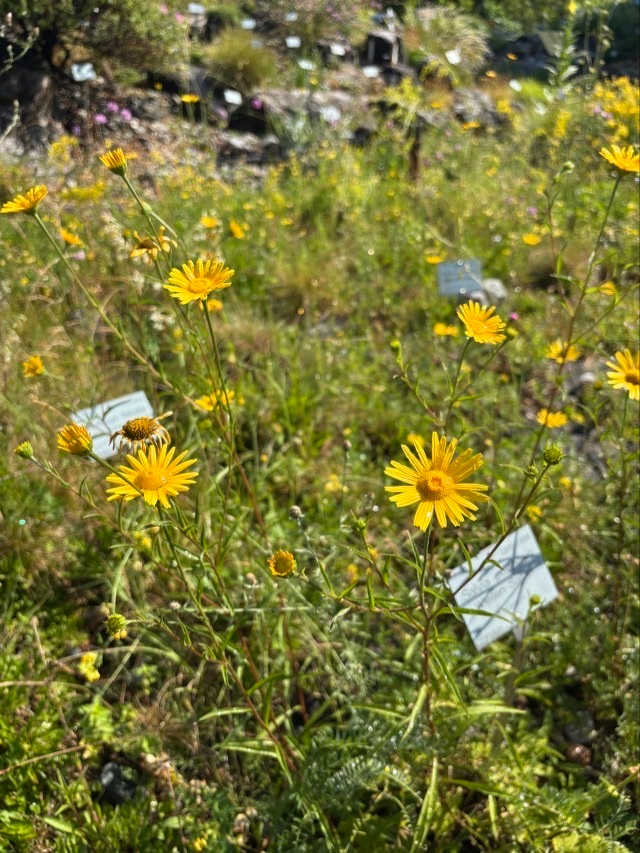
Buphthalmum salicifolium
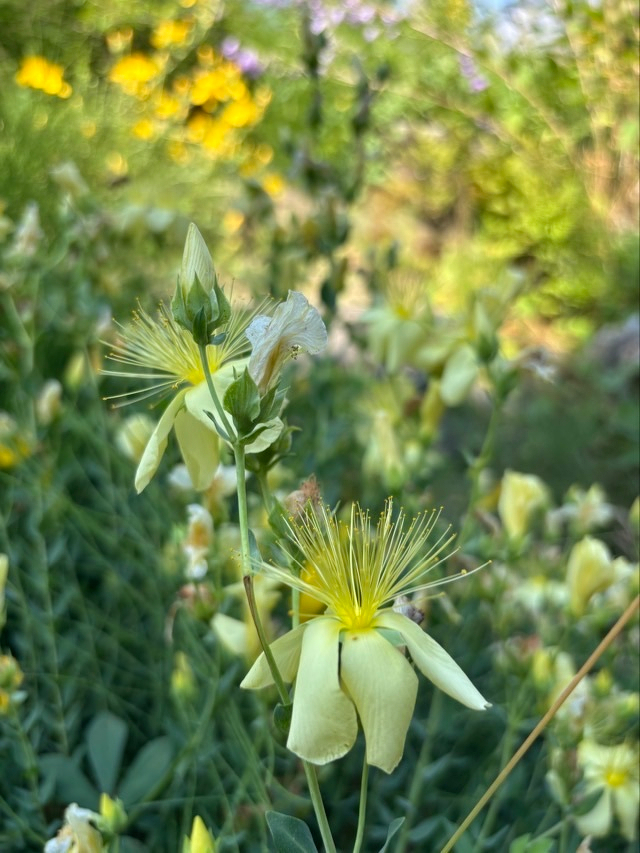
Hypericum richeri
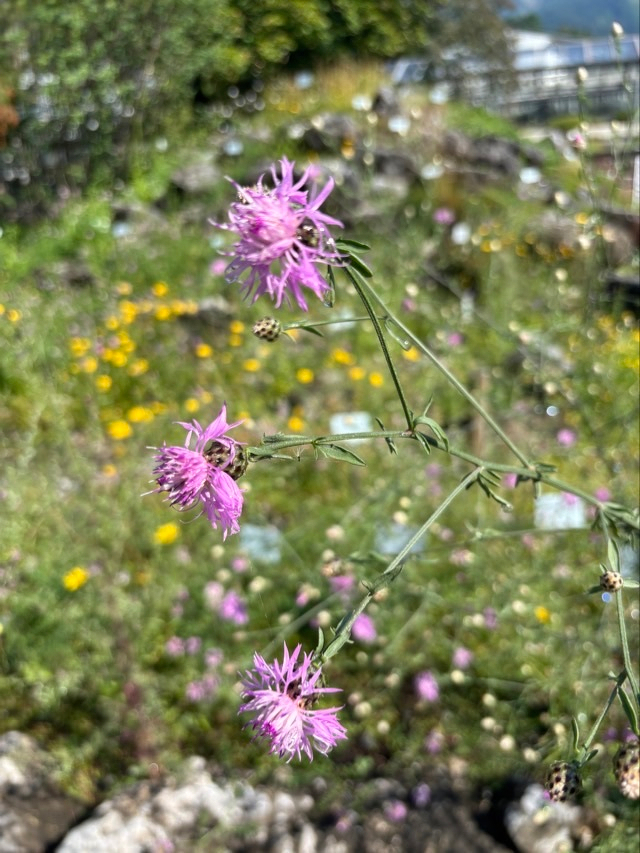 Centaurea stoebe
There are a number of educational elements, and QR codes to scan, which add to the experience. A collection of 3 tubes, fixed at various angles and directed at the nearby mountains, reveal when looked through different altitudes, while a nearby sign details the differing vegetation at each level. Perhaps the most arresting exhibit, however, is a signpost at the centre of the garden with 3 signs. Each one points to a glacier and alongside the name is the year that glacier is expected to, under current climate policy, disappear entirely.
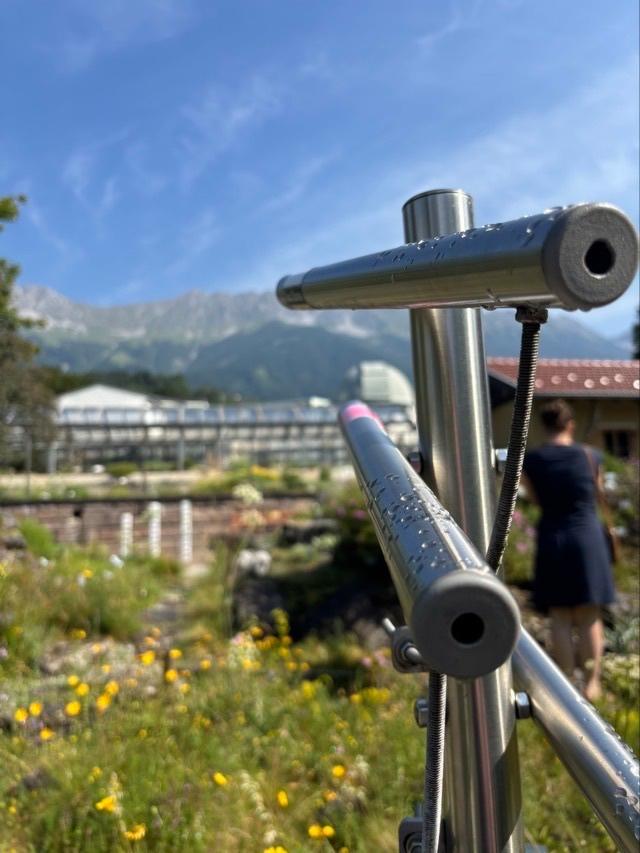 Viewers showing various altitudes on the mountain
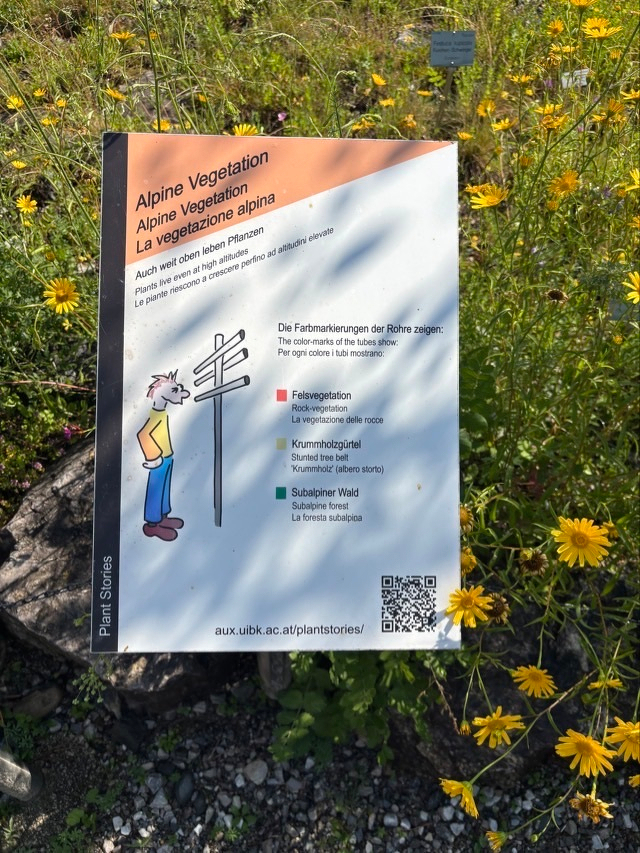 The accompanying sign, showing the vegetation at these levels
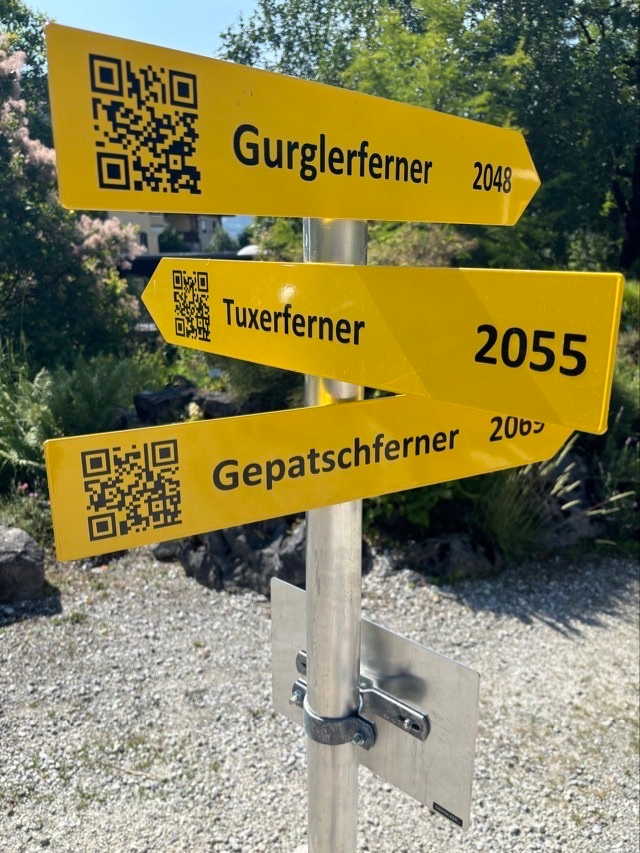 A warning that glaciers have an expiry date, unless we act now
The garden also features a systematic garden with plants laid out by family, which wasn’t looking at its best, and a prairie-style planting. However my limited time was short, and I could only glance at these while passing through.
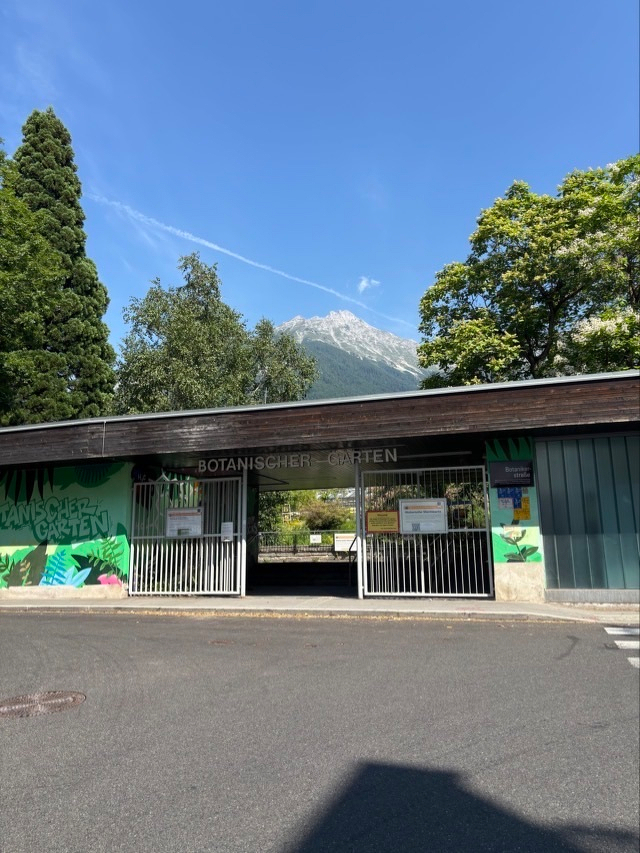 The main entrance, should you find that first
I really enjoyed the visit and would love to come back some time, perhaps for a tour with an expert in alpine plants. If you’re in the area, visiting the garden is free, but I believe there’s a small charge for the glasshouses, if they’re open.